

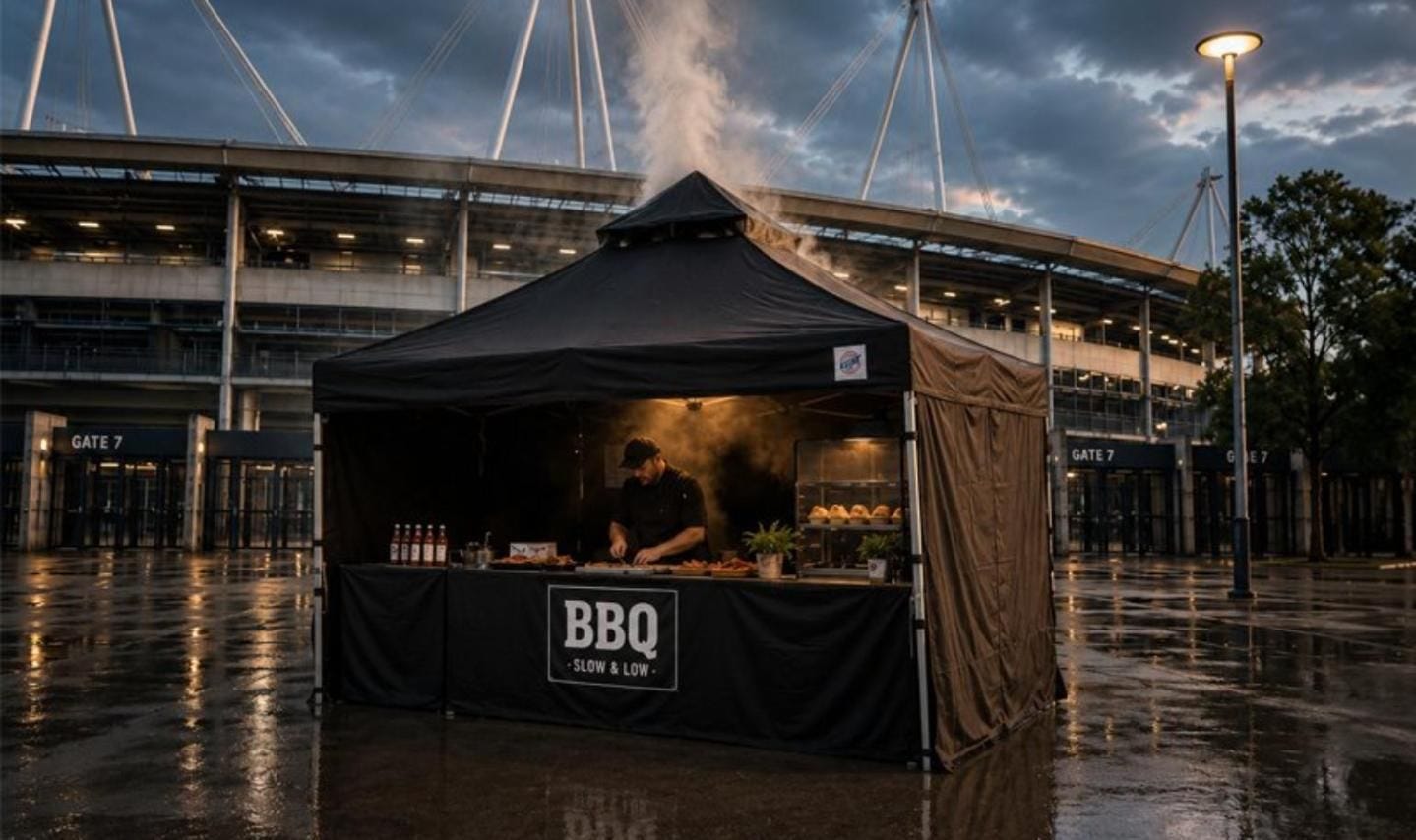
If you've ever watched a canopy tent catch the wind like a sail, you already understand why choosing the right top matters. The debate between vented vs. non-vented canopy tops is one of the most common questions among outdoor enthusiasts, event vendors, tailgaters, and beachgoers and the answer isn't one-size-fits-all.
A vented canopy top includes one or more raised fabric sections near the peak that allow air to flow through the structure. In contrast, a non-vented canopy has a single continuous fabric surface without any openings. This key difference affects airflow, wind resistance, comfort, and the most suitable conditions for each type of setup.This guide breaks down how each design works, when each excels, and how to pick the right one for your next outing.
What Is a Vented Canopy Top?
A vented canopy top is built with an opening or raised secondary layer at the peak; essentially a chimney for air. As wind strikes the canopy, instead of building pressure beneath the fabric (which causes the tent to lift), air is channeled upward and out through the vent. This is called pressure equalization: balancing the air pressure inside and outside the canopy so the structure stays grounded.
Most vented shelters comes in one of two configurations:
Single-Vent Top:
A single raised panel at the peak lets air escape. This is the most common vented design and performs well in moderate wind conditions.
Double-Vent (Dual-Vent) Top:
Two separate vent layers at the peak deliver enhanced canopy ventilation and superior stability. The Spectator™ Dual-Vent Shelter uses this design for maximum airflow and wind resistance, ideal for beaches, sports fields, and open-air markets.
What Is a Non-Vented Canopy Top?
A non-vented canopy is made from a single, continuous piece of fabric that spans the entire top of the frame with no gap or raised layer.
Non-vented tops are simple, affordable, and effective in calm conditions. Because the top is fully sealed, they also provide better rain coverage, there's no opening for precipitation to sneak through. This makes them a solid choice for backyard gatherings, shaded market stalls, or any setting where wind isn't a significant concern.
How Vented Tops Reduce Canopy Wind Uplift
One of the biggest risks with any canopy tent is canopy wind uplift -the force created when wind flowing over a solid top generates low pressure above and higher pressure below, literally pulling the shelter skyward. It's the same aerodynamic principle that gives airplane wings their lift, and it can be surprisingly powerful even in moderate gusts.
A vented top helps solve this issue by improving airflow. When wind strikes a solid canopy, air pressure can build up underneath. With a vent at the peak, that trapped air is released upward, balancing the pressure and significantly reducing the lifting force on the structure. For open, high-exposure environments, coastal areas, parking lots, fields etc, this matters a lot.
Airflow, Comfort & Canopy Ventilation
Wind resistance isn't the only reason to choose a vented top. Canopy ventilation also makes a real difference in comfort for the people underneath.
On a hot, sunny day, heat accumulates under a solid canopy. Without circulation, temperatures beneath the fabric can climb noticeably above ambient air temperature. A vented top allows rising warm air to escape through the peak, drawing cooler air in from the sides ; a simple, passive convection effect.
For afternoon events like beach outings, market events or outdoor sports, this cooling benefit is genuinely noticeable. It won't replace shade or fans, but it makes the space more bearable when the sun is bearing down.
Vented vs. Non-Vented: Side-by-Side
| Feature | Vented Canopy Top | Non-Vented Canopy Top |
|---|---|---|
| Wind Resistance | Superior - reduces uplift via pressure equalization | Lower- solid surface creates pressure differential |
| Airflow / Cooling | Better - warm air escapes through vent | Minimal- heat collects underneath |
| Rain Protection | Good -angled vent panels handle most rain | Excellent -fully sealed top |
| Cost | Slightly higher | Generally lower |
| Best For | Beach, tailgating, open fields, sports events | Backyard use, calm-weather markets, sheltered spaces |
Which One Do You Actually Need?
Go with a vented canopy top if you're setting up in open, exposed environments, coastal areas, parking lots, sports fields, or anywhere gusts are unpredictable. The combination of improved wind stability and passive cooling makes a vented shelter the right call for beach trips, tailgates, and outdoor events that run through the heat of the day.
The Pyramid™ Vented Shelter is a great starting point, compact, reliable, and built with a single-vent top for solid all-around wind performance. For higher-wind settings where you want every advantage, the Spectator™ Dual-Vent Shelter delivers dual-layer venting that's hard to beat in demanding outdoor conditions.
Browse the fullVented Canopy Shelters collection to compare models and find the right fit.
Go with a non-vented canopy top if you mostly set up in calm, sheltered environments , a backyard party, a covered farmers market, or an event venue where wind isn't a real factor. If rain protection is the priority and gusts are rare, a non-vented top gives you clean, solid coverage at a lower cost.
Frequently Asked Questions
What is the difference between a vented and non-vented canopy top?
A vented canopy top has one or two raised fabric panels near the peak that allow air to pass through, reducing wind uplift and improving airflow. A non-vented top is a single continuous piece of fabric , simpler and better at keeping out rain, but more vulnerable to wind pressure.
Does a Vented Canopy Top Help in Windy Conditions?
Yes, it does. Vented canopy allows wind to pass through the top, which helps reduce pressure buildup and improves overall stability in breezy conditions.
Will a Vented Canopy Make the Space Cooler?
Yes, it does help. Warm air rises naturally and escapes through the vent. Whereas, the cooler air flows in from the sides. Canopy ventilation cannot replace fans or other cooling solutions, it does improve airflow and make the space underneath more comfortable.
Is a vented canopy better for the beach?
For most beach setups, yes. Coastal winds are gusty and unpredictable. And the heat factor makes the ventilation a bonus. A vented top handles both challenges better than a solid one. Pair it with weight bags on each leg for maximum stability.
Can a vented canopy still keep out rain?
Yes, in most cases. Vented canopies are designed to block light to moderate rain, though heavy rain may allow some moisture through the vent. Sidewalls provide the best protection against wind-driven rain.