

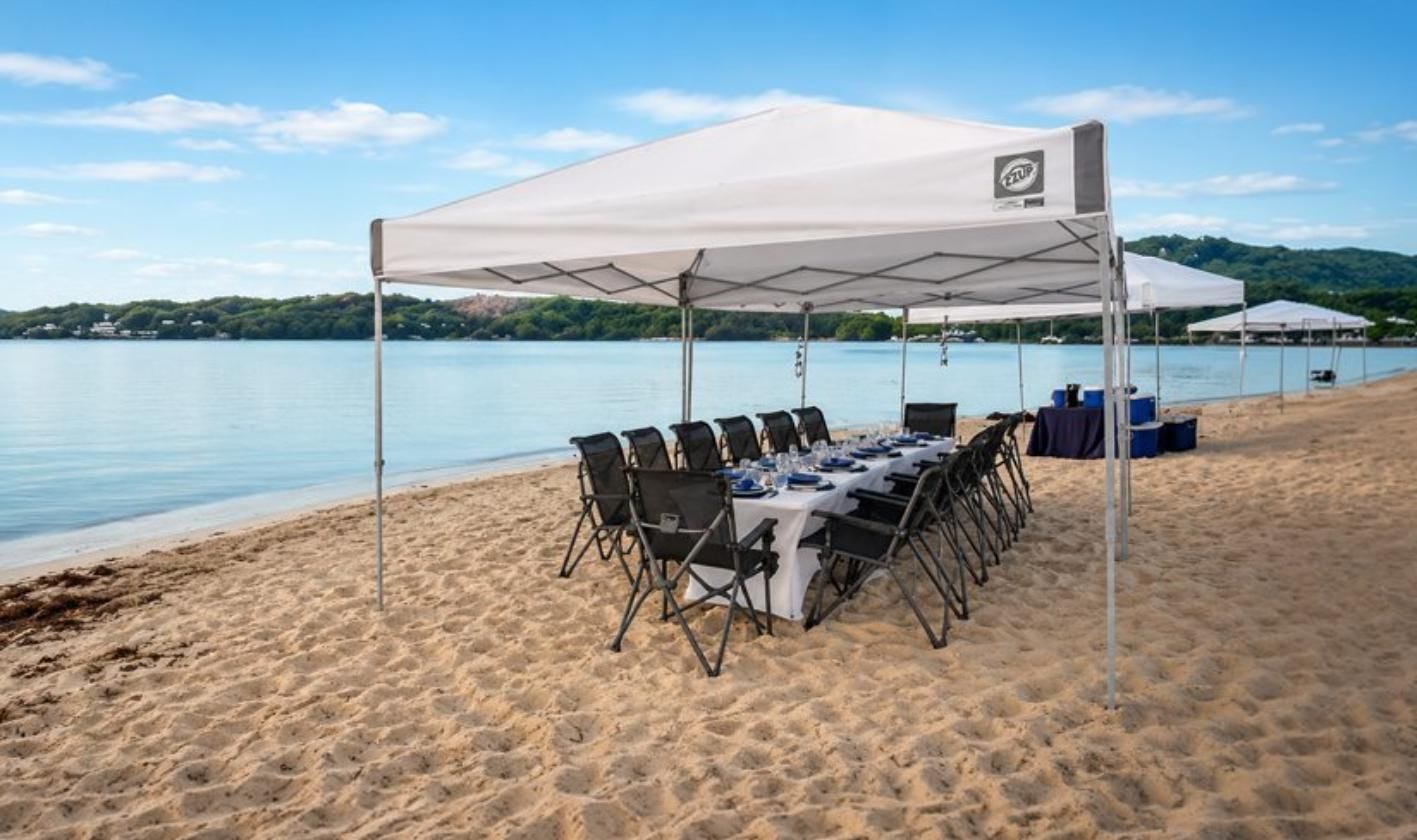
Choosing the wrong tent size is one of the most common mistakes event planners and vendors make. You either end up with guests crammed under inadequate coverage or a tent so oversized it dominates your entire setup space.
The right size isn't just about headcount. It's about how you use the space, tables, product displays, workflow, and guest comfort all factor in. This guide breaks down real-world capacity numbers for the three most popular canopy tent sizes: 10x10, 10x15, and 10x20.
How Much Space Do You Actually Get?
Before getting into people counts, it helps to understand what each tent size actually gives you in square footage:
- 10x10 = 100 sq ft
- 10x15 = 150 sq ft
- 10x20 = 200 sq ft
In general, a 10x15 canopy tent can accommodate more people in a standing layout than a seated one. Plan for about 6 sq ft per person when standing and 10–12 sq ft per person for seated arrangements, adjusting for any tables, displays, equipment, or walkways.
How Many People Fit Under a 10x10 Canopy Tent?
The 10x10 is the most widely used canopy size and for good reason. Its 100 square feet covers enough ground for most single-booth vendor setups, small backyard gatherings, and team sideline stations.
Realistic capacity:
- Standing/mingling: 8–12 people
- Seated at tables: 4–6 people (one 6-ft table with chairs on both sides)
- Vendor booth setup: 1–2 vendors with a display table and product space
For a farmers market vendor, a 10x10 is the standard footprint. Most markets allocate exactly this space per vendor, making it the default canopy tent for farmers market setups. You'll typically fit one folding table across the front, shelving or display racks inside, and still have room to move behind the table.
If your entire booth is the display, 100 sq ft works well. If you need customers to step inside and browse, it starts to feel tight.
Browse our 10x10 canopy tent collection to find the right model for your setup.
How Many People Fit Under a 10x15 Canopy Tent?
The 10x15 sits in a sweet spot that most buyers overlook. At 150 sq ft, it gives you 50% more coverage than a 10x10 without jumping to the full footprint of a 10x20.
Realistic capacity:
- Standing/mingling: 12–18 people
- Seated at tables: 8–12 people (two 6-ft tables with chairs)
- Vendor booth setup: Enough room for a front display table, side product racks, and a comfortable customer browsing area
The 10x15 is particularly useful for vendors who sell products that benefit from a walk-in experience; handmade goods, packaged foods, plant sales. Customers can step inside, turn around, and browse without bumping into each other.For outdoor parties and family gatherings, 10x 15 size can handle a small birthday celebration or a casual backyard cookout comfortably. Two standard rectangular tables and folding chairs fit without crowding.
Explore 10x15 canopy tent options built for both vendor and event use.
How Many People Fit Under a 10x20 Canopy Tent?
The 10x20 is the go-to choice when you need serious coverage. With 200 sq ft of usable space, it works for mid-size outdoor gatherings, dual-vendor setups, or commercial activations that need room for staff, product, and customers simultaneously.
Realistic capacity:
- Standing/mingling: 20–30 people
- Seated at tables: 16–20 people (three to four 6-ft tables with chairs)
- Vendor or commercial setup: Two product tables, display racks, a checkout station, and walking room for multiple customers at once
Check out our full range of 10x20 canopy tents for events, markets, and commercial use.
What Size Canopy Tent Do You Need for 20 People?
If you're hosting 20 people at a seated outdoor event, a 10x20 is your minimum. Realistically, you'll want to plan for 10–12 sq ft per seated guest to include table space, chairs, and aisle room between tables.
For 20 standing guests at a casual event, a 10x15 can work. But for a 10x20, this gives you the breathing room that makes an event feel comfortable rather than cramped.
If you're a vendor expecting 20 customers to flow through your booth across an afternoon, the number that matters isn't simultaneous capacity, it is how many people can comfortably browse at once. A 10x15 handles 4–6 browsing customers at a time; a 10x20 handles 8–10.
Is a 10x10 actually enough for a Vendor Booth?
For most single-vendor setups, yes.The 10x10 is the standard booth size at farmers' markets, craft fairs, and trade shows across the country. Event organizers often allocate exactly 10x10 spaces, so that your tent fits the footprint perfectly.
For vendors with heavy inventory, a large product range, or those who want customers to walk fully inside their booth, stepping up to a 10x15 or pairing two 10x10 tents side by side is worth considering.
Adding canopy sidewalls to a 10x10 can also help define your booth space, creating it into a more professional, enclosed feel especially useful at busy markets where neighboring booths compete for attention.
The 10x20 isn't simply a bigger 10x10 ; it changes how you can structure your layout. You gain the ability to separate operational zones: a display zone, a checkout zone, and a customer flow path. That distinction matters more for commercial and vendor applications than for casual events.
For vendors exploring professional-grade options, our commercial canopy shelters are built for repeated use across all three sizes.
Tips to look on Before You Buy
A few factors beyond raw square footage should influence your decision:
- Your event space: Some venues or markets have a strict size limits. So, always check and confirm before purchasing.
- Setup crew: A 10x10 can be set up by one person. A 10x20 typically requires two.
- Transport: Larger tents mean heavier carry bags and longer poles. Factor in vehicle space.
- Accessories: Sidewalls, weights, and lighting add to both the footprint and functionality of any size. See canopy accessories to plan a complete setup.
- Custom branding: If you're representing a business, a custom printed canopy tent in any size immediately elevates your booth's professional presence.
Choosing the Right Size
Choose a 10x10 if: You're a solo vendor, have a compact product displays.Also, if you need a portable canopy for small tailgates and picnics. It's easy to set up alone and fits in most event spaces.
Choose a 10x15 if: You need room for a back prep area and a customer-facing display, or you're hosting a casual party for 12–16 guests. It's a versatile mid-size option that doesn't get enough attention.
Choose a 10x20 if: You need the 10x20 canopy tent capacity for larger gatherings of 20 or more, you're running a two-person booth, or you want the flexibility to expand your setup over time.
Frequently Asked Questions
How many people can fit under a 10x10 canopy tent?
A 10x10 canopy tent comfortably fits 6–10 people. For vendor booth setups this can accommodate one or two vendors alongside a product display table, leaving limited but functional space for customers to browse from the front.
How many guests can a 10x15 canopy tent accommodate?
A 10x15 tent fits 10–15 people standing or 8–12 people seated at two standard tables. It offers 50% more floor space than a 10x10, making it a practical choice for walk-in vendor booths, small outdoor parties, or setups that require both a display area and customer browsing space.
How many people can fit under a 10x20 canopy tent?
A 10x20 canopy tent can accommodate 16–20 seated guests or 20–30 in standing. It fits three to four 6-foot tables with chairs, making it well-suited for mid-size outdoor events, dual-vendor market setups, or commercial booths that need separate zones for display, checkout, and customer flow.
What size canopy tent do I need for 20 people?
For 20 seated guests, a 10x20 canopy tent is the minimum recommended size. It provides enough room for four 6-foot tables, chairs, and aisle space between them. If your guests will be standing and mingling casually, a 10x15 can work, but a 10x20 gives noticeably more comfort.
Is a 10x10 canopy tent big enough for a vendor booth?
Yes, for most vendor booth applications. The 10x10 is the standard allocated space at farmers markets, trade shows, and craft fairs. It fits a display table and shelving with room for 1–2 vendors to work. If your product line requires customers to step fully inside and browse from multiple sides, consider stepping up to a 10x15.