

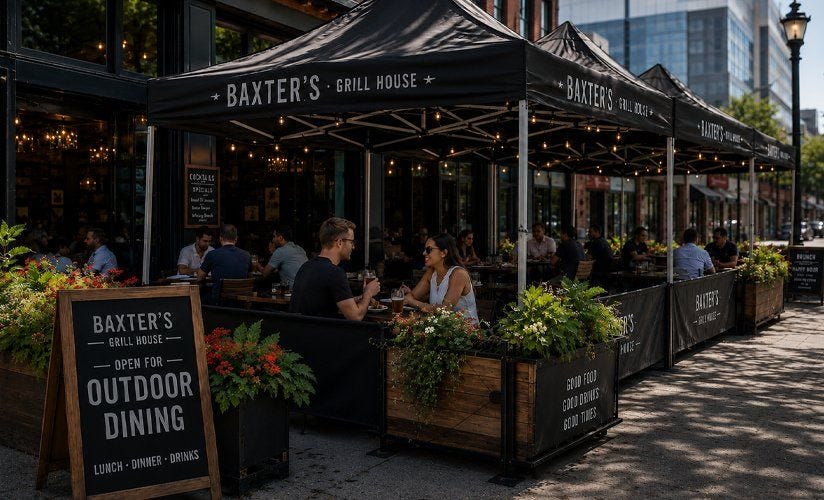
Restaurants looking to expand seating without construction can use a commercial canopy tent to create a covered outdoor dining area quickly and affordably. The right setup protects the guests from sun and light rain, meets local regulations, adding a usable revenue-generating space without a permanent build-out.
Outdoor dining has shifted from a seasonal bonus to a core part of restaurant operations. Guests expect comfort, and covered patio seating delivers exactly that. But setting up an outdoor dining which actually works means thinking beyond just placing a tent outside. For that you need the right structure for your space, weather conditions that match the region, with materials that hold up through service hours, and a layout which can keeps both guests and staff moving efficiently.
Here, in this guide it walks you through everything you need to make that happen.
What Kind of Canopy Tent Works for Restaurant Outdoor Seating?
Not every tent belongs in a food service environment. A recreational pop-up designed for weekend tailgating will not hold up to daily commercial use, and in many jurisdictions, it will not pass a health or fire inspection either.
Commercial vs. Recreational Canopy Tents
A commercial canopy tent is built with a heavier-gauge frame that typically has steel or aircraft-grade aluminum . And a fabric top rated for extended exposure. The distinction matters operationally:
- Frame strength: Commercial frames handle the wind loading that recreational models cannot. For a restaurant setup that stays up through service five or six days a week, this is a non-negotiable one.
- Fabric rating: Commercial tops use a higher-denier polyester or vinyl with UV inhibitors, water-repellent coatings, and fire-resistant treatment.
- Certifications: A restaurant canopy needs to meet CPAI-84 and NFPA 701 fire resistance standards. Many local fire marshals require a certification tag on any tent used over food service or public assembly.
E-Z UP's range of commercial canopy tents includes options built to these standards, with frames designed for repeated daily setup and breakdown. The Endeavor Shelter, for example, carries CPAI-84 and NFPA 701 certifications and is built with 6061-T6 aluminum which is a kind of material that survives a long summer of outdoor service without warping or corroding.
What Canopy Size is required?
Sizing depends on table count and configuration. A general starting point:
- 10x10 ft: Covers two to three two-top tables. Suitable for a compact sidewalk setup or a dedicated bar area.
- 10x20 ft: Covers a row of four-top tables comfortably. Works well for a patio section.
- 10x30 ft or larger: Needed for full patio replacement or large outdoor seating areas.
Account for server access lanes, ADA clearance, and spacing between tables. Crowding the space under a canopy creates heat buildup and makes guests uncomfortable. If you are covering multiple seating clusters, running two or three canopies side by side with connected frames is often more manageable than a single large structure.
Permit for Outdoor Restaurant Seating Under a Canopy- Actually needed?
In many cities, yes. Outdoor dining canopies often require permits or approvals from local authorities before use.
Common permit categories to check:
- Fire marshal inspection: This is needed when a temporary structure covers the public assembly or food service. The inspector checks the fire resistance certification, anchoring method, and a clearance from heat sources.
- Health department review: Some counties require an updated food service permit or a separate outdoor service addendum, when a permanent or semi-permanent canopy structure is added.
- Building or zoning approval: A canopy placed on a sidewalk, parking area, or property line may need a temporary use permit or a zoning variance.
- Encroachment permit: Canopies that extend over public sidewalks typically require a city-issued permit.
A canopy provides valuable protection from sun and light weather conditions, but maintaining food safety outdoors requires more than overhead coverage. Temperature control, sanitation, and pest prevention all play a critical role in creating a safe dining environment.
For example, a 40-seat restaurant expanded its summer seating with a 10' x 30' outdoor canopy. Shortly after opening the space, the staff noticed an increase in flies around the service area. The canopy had created a warm, sheltered environment with limited airflow. And installing sidewalls with mesh window panels improved the ventilation helping keep insects out, and resolving the issue without disrupting guest comfort.
How Do You Anchor a Canopy Tent on Concrete for Restaurant Use?
Anchoring on a hard surface is one of the most common challenges for restaurant operators. Ground stakes work on grass but are not an option on a parking lot or patio slab.
Options for concrete anchoring:
- Weight plates or sandbags: Plate weights of 25 to 40 lbs per leg provide a meaningful stability in moderate wind. Most commercial canopies accommodate plate weights or weight bag hooks at the base of each leg.
- Bolt-down anchor kits: For semi-permanent installations, expansion anchors drilled into concrete and fitted with leg-mount hardware are the most stable solution.
- Water-fillable weights: Large bladder weights which fill on-site reduces the transport weight, holding 50+ lbs per leg when filled.
Never operate a canopy over an active dining area without anchoring it to the surface. Even a brief wind gust can lift an unsecured 10x20 canopy and injure guests or staff.
Adding sidewalls to your outdoor dining setup changes the guest experience in ways that go beyond weather protection.E-Z UP has a detailed breakdown of the benefits in their guide on whether canopy tents need sidewalls
From a restaurant-specific standpoint, sidewalls:
- Reduce the wind and ambient noise, which matters for guests trying to have a conversation over a meal
- Create a defined dining zone that signals to foot traffic that this is a seated space, not a passthrough
- Block kitchen sight lines improving ambiance without a permanent structure
- Provide rain protection on angled weather days where overhead coverage alone is not sufficient
Explore the full range of canopy sidewall options including full-coverage panels, mid-zip panels, and food booth wall systems designed specifically for food service environments.
Does a Custom Branded Canopy Improve the Restaurant Guest Experience?
A custom branded canopy does more than provide shade and weather protection. It helps increase visibility, strengthens brand recognition, and creates a more professional outdoor dining space.
For restaurants in busy pedestrian areas, a canopy featuring your logo and brand colors can attract attention and help drive walk-in traffic. It also reinforces a polished, consistent appearance which enhances the overall guest experience.
A well-maintained branded canopy signals quality and professionalism, while worn or mismatched canopies can leave a less favorable impression.
Can a Canopy Tent Support Year-Round Outdoor Dining?
With the right equipment and accessories, yes. Though the configuration needs to change by season.
- Summer: Full ventilation. Use sidewalls minimally or remove them. UV-rated tops are critical in direct sun environments.
- Fall and spring: Side panels on the prevailing-wind face of the tent keep the guests comfortable without fully enclosing the space.
- Winter: Full sidewalls, heating units positioned at leg bases, and weighted anchoring. In cold climates, check that your fabric top is rated for snow load before using it in winter service.
The structural difference between a tent that lasts one season and one that lasts five years comes down to frame grade and fabric quality. A commercial-grade tent is an investment that pays for itself across multiple seasons rather than requiring replacement annually.
Conclusion
A canopy tent can be a valuable addition to any outdoor dining space when it is chosen and set up correctly. The right tent helps provide weather protection, improving the guest comfort, support safety requirements, and create a more polished dining environment.Features such as commercial-grade materials, accurate sidewall options, and custom branding further enhances both functionality and appearance. Equally important are proper anchoring, food safety practices, and compliance with local regulations.Let it be like, you're expanding outdoor seating for the first time or replacing an existing setup, investing in a quality canopy creates a stronger foundation for a successful outdoor dining experience.
Frequently Asked Questions
What size canopy tent do I need for outdoor restaurant dining?
The right size depends on your table layout and seating count. A 10x10 tent covers two to three small tables. A 10x20 handles a row of four-top tables. For full patio coverage, go for 10x30 or multiple connected canopies. Always account for server aisles, ADA clearance, and airflow do not pack tables edge to edge under the canopy.
Do I need a permit to use a canopy tent for outdoor restaurant seating?
Yes, many cities require permits for outdoor dining canopies. And depending on local regulations, approvals may also be needed from fire, health, or other building authorities. If the canopy extends into a public space, additional permits may also apply. Always check local requirements before installation.
What fire safety standards should a restaurant canopy tent meet?
Look for canopies certified to CPAI-84 and NFPA 701 fire resistance standards. Many municipalities require the certification tag to be physically present on the tent during inspection. E-Z UP commercial and professional-grade canopies carry these certifications and are appropriate for permitted outdoor food service.
How to keep food safe at an outdoor dining tent setup?
Always keep food covered until service. Monitor holding temperatures regularly, and provide staff with access to a hand-washing station. Mesh sidewalls help in reducing insect intrusion, maintaining airflow. Keeping a cleaned temperature log can also support health code compliance.
How do sidewalls help in improving outdoor dining environments?
Sidewalls reduce wind, block rain on angled weather days, dampen ambient noise, and create a defined seating area. This improves the guest experiences. For food service, sidewalls with mesh panels provide insect control without eliminating airflow. Also, they reinforce the visual boundary of your dining space, reducing foot traffic interruptions during service.