

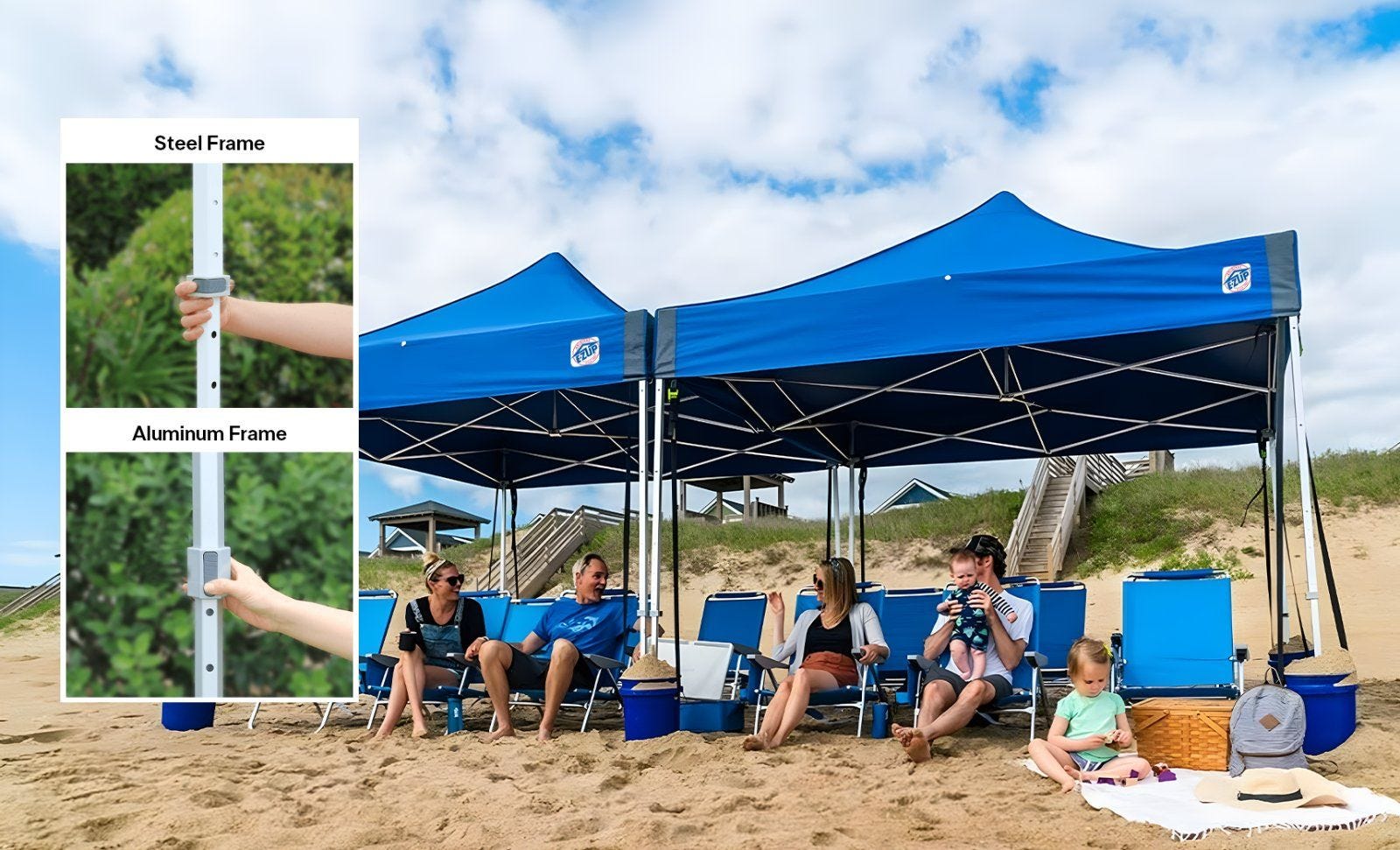
Pop up canopy tent lifespan varies more than most buyers expect. The same basic product, a folding frame with a fabric top, can last three years or fifteen, depending almost entirely on what it's made of and how it's used. We've been building Instant Shelters since 1983, and in that time, we've learned exactly what separates a shelter that earns its keep from one that gets replaced every other season.
Here's what actually determines longevity.
Frame Material: The Single Biggest Factor
The fabric can be replaced. The frame is the real investment. Two materials dominate the market, and the difference between them matters far more than most buyers realize.
Steel is heavier and solid-feeling out of the box, but it's vulnerable to moisture. A rust-resistant canopy frame requires proper powder-coating or galvanization. On the other hand, bare or lightly painted steel will begin corroding at connector joints within a few seasons of outdoor use, especially in humid or coastal environments. Steel frames work fine for occasional backyard events, but they're a liability for anyone setting up regularly.
Aluminum does not rust. It is much more useful for frequent use and is lighter and easier to pack. A commercial-grade aluminum pop-up canopy tent frame differs from a consumer-grade one based on the joint construction and wall density. When subjected to real-world usage circumstances, thicker walls typically last longer, show less flexing, and withstand more setup and takedown repetitions without deteriorating pivot points.
Our Eclipse™, Endeavor™, and Freedom83™ all use aircraft-grade aluminum for exactly this reason. The weight savings are a bonus. The longevity is the point.
Steel vs. Aluminum Pop-Up Tents at a Glance

Lifespan by Duty Rating
The heavy duty vs medium duty canopy tent distinction isn't just a marketing label. Instead, it reflects real differences in wall thickness, leg diameter, and connector engineering.
Entry-level (steel, occasional use): 1–2 seasons of regular use before joints loosen, rust appears at connection points, and the frame becomes unreliable.
Mid-range aluminum (medium duty): 3–5 years with consistent weekend use. These frames handle normal vendor and event setups well, but start showing fatigue at the hinges under high-frequency deployment.
Professional aluminum (heavy duty): 5–10 years with proper maintenance. This is where our Eclipse™ lives. The frame handles repeated outdoor use across full seasons without structural compromise.
Commercial-grade (maximum duty): 10+ years. Our Endeavor™ uses a patented octagonal leg cross-section specifically designed to resist the torsional stress that round legs can't handle at high deployment frequency. At the top end, the Freedom83™ carries our Lifetime Warranty, which should tell you everything about how long we expect it to last.
What Shortens Lifespan the Fastest
Rather than product failures, the majority of early retirements are caused by three practices.
Storing the tent wet. Moisture speeds up corrosion at steel joints, and mildew gradually erodes fabric coverings. Before putting the canopy away, always allow it to thoroughly dry. More than everything else, this one behavior increases longevity.
Not anchoring in wind. A canopy that catches wind and flips will almost always mean bent legs. Weight bags and stakes aren't optional accessories. Instead, they're what keep the frame intact. Every E-Z UP setup should be anchored, regardless of how calm the forecast looks.
Forcing the mechanism. Stripped locking pins are almost always operator error, not a product flaw. Let the mechanism do the work. Our ONE-UP locking system is designed to be smooth and intuitive, but no mechanical system benefits from being rushed.
Maintenance tip: Apply silicone lubricant to scissor joints every few months. It takes five minutes and adds years to the frame's working life.
The Bottom Line
When used correctly, a well-selected aluminum canopy will outlast the less expensive option by several rounds. You'll spend less over time, deal with fewer mid-season failures, and end up with a frame that can accept a new top and continue to function when the fabric inevitably wears out if you match the duty rating to your actual use frequency rather than your anticipated frequency.
FAQs
How long does a pop up canopy last?
The average lifespan of a canopy tent is between two and eight years, but commercial-grade or high-quality models can survive up to ten years with the right maintenance. The two most important factors are deployment frequency and frame material.
Heavy duty vs medium duty canopy. Which lasts longer?
Heavy-duty canopies last longer because they use thicker frames and stronger connector joints built to handle more setups and harsher conditions. If you're setting up every weekend, the heavy-duty option pays for itself within the first season or two.
Which material is best for canopy tent durability?
The obvious solution is aluminium, especially aircraft-grade aluminum. It is substantially lighter than steel, does not rust, and can withstand many deployment cycles without experiencing structural fatigue. The standard for durability is an aluminum canopy frame with thick walls that is resistant to rust.
What makes a good quality pop-up canopy?
A sturdy frame with thick aluminum walls or properly coated steel, well-designed connector hubs, and durable fabric rated for repeated outdoor use. Features like pinch-free locking systems and one-piece frame designs reduce mechanical wear with every setup.
Can I replace just the canopy top when it wears out?
Yes, and this is one of the real advantages of investing in a quality E-Z UP frame. When the fabric eventually fades or wears, you replace the top, not the entire shelter. It's far more cost-effective over time than replacing the whole unit every few seasons.