

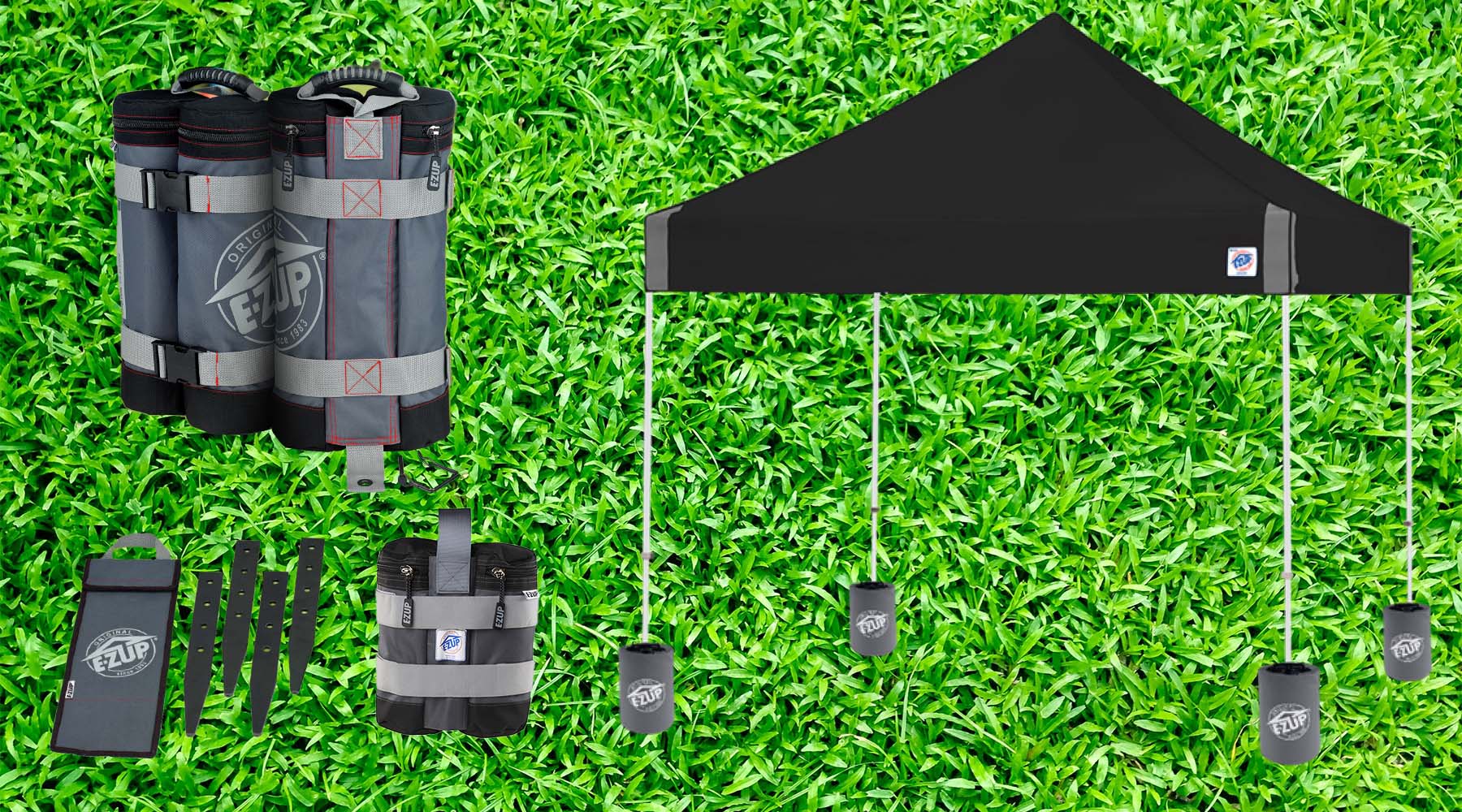
Proper anchoring is essential whenever you set up a commercial canopy or pop-up tent. The right solution depends on the shelter model, ground surface, venue rules and changing weather—not on a single universal weight number.
Use compatible E-Z UP® anchoring accessories at every shelter leg, follow the instructions for both the shelter and accessory, and dismantle the canopy when conditions exceed the product guidance or site requirements.
Why proper canopy anchoring matters
- Safety: A correctly secured shelter is less likely to shift unexpectedly during changing conditions.
- Equipment protection: Anchoring helps protect the canopy, merchandise and equipment beneath it.
- Professional presentation: A stable, properly installed shelter looks better and performs more predictably throughout an event.
Choose an anchoring method for the surface
Concrete, asphalt and other hard surfaces
When ground stakes cannot be used, choose compatible canopy weights for every shelter leg. Available options include:
- Deluxe Weight Bags that can be transported empty and filled according to the product instructions.
- Recreational Weight Bags for compatible recreational setups.
- Water Weight Bags that can be filled where clean water is available.
- Weight Plates made from stackable cast iron for compatible E-Z UP® shelter legs.
Grass and suitable soil
A compatible Heavy-Duty Stake Kit may be appropriate where the ground and site rules permit staking. Install every component according to its instructions and verify that the soil provides suitable holding strength.
Weight bags versus weight plates
Weight bags are easier to transport when empty and are useful when filling material is available at the destination. Water-filled options can reduce transport weight even further. Cast-iron plates are compact and quick to position, but they are heavier to transport and must be compatible with the shelter leg.
Check the product page for capacity, pack quantity, included components and compatibility before ordering. An event or municipality may also specify minimum ballast requirements that must be followed.
Can weights and stakes be used together?
Where the shelter instructions, surface and venue rules allow it, more than one approved anchoring method may be appropriate. Never improvise attachment points or substitute incompatible hardware.
Important wind and weather considerations
Anchoring improves stability but does not make a temporary shelter safe in every weather condition. Sidewalls, banners and other panels can increase the surface exposed to wind. Monitor conditions, recheck the setup during use and remove the shelter when required by the instructions or event officials.
Explore all available canopy anchoring and wind-protection accessories, or contact the E-Z UP Canada team if you need help identifying compatible equipment for a specific shelter.
Pre-event anchoring check
Complete the anchoring plan before arriving at the venue. Confirm the surface, the shelter model, permitted attachment methods and any minimum ballast required by the organizer or municipality. Bring the instructions for both the shelter and every anchoring accessory.
- Anchor every leg using compatible equipment.
- Place weights where they cannot create a trip hazard.
- Never attach ropes or hardware to points that are not designed for anchoring.
- Recheck connections after sidewalls, banners or displays are installed.
- Assign someone to monitor weather and inspect the setup during the event.
- Dismantle the shelter when required by the product instructions, venue staff or changing conditions.
Anchoring reduces movement; it does not turn a temporary canopy into a permanent structure or make it suitable for every wind condition.