
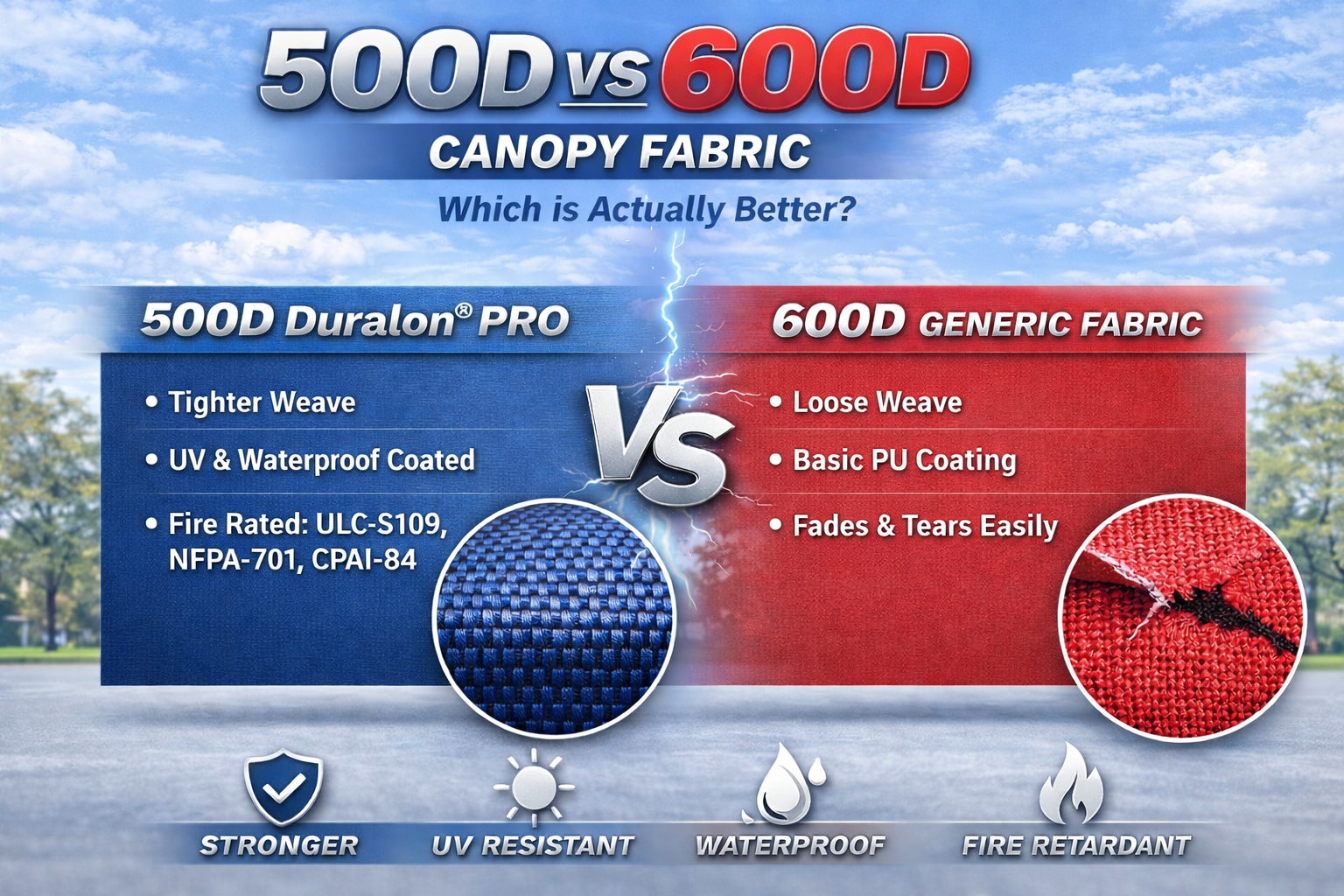
When comparing pop-up canopies or portable shelters, you’ll often see fabric specifications listed as 500 denier (500D) or 600 denier (600D).
At first glance, it seems logical that 600D fabric must be stronger simply because the number is higher. But when it comes to professional-grade canopy materials, denier alone does not determine durability or quality.
In fact, many high-end canopy manufacturers intentionally use engineered 500-denier fabrics because they provide superior performance in real-world outdoor conditions.
Let’s take a closer look at what denier actually means and why a well-engineered 500D canopy fabric can outperform many 600D fabrics.
What Does “Denier” Mean?
Denier is a measurement used in textiles that refers to the thickness of the individual yarn fibers used to construct a fabric.
-
Higher denier = thicker yarn
-
Lower denier = thinner yarn
However, the denier rating does not measure overall fabric strength.
Denier does not account for important factors such as:
-
Fabric weave density
-
Coatings and waterproof treatments
-
UV resistance
-
Tear strength
-
Manufacturing quality
Because of this, two fabrics with different denier ratings can perform very differently outdoors.
Why 500D Can Be Better Than 600D for Canopies
Many professional-grade canopy fabrics are engineered using 500-denier polyester with high-performance coatings and tight weave construction.
These fabrics are designed specifically for outdoor shelters that must withstand sun, rain, and wind over long periods of time.
Here are the key reasons why.
1. Tighter Weave = Greater Strength
A well-engineered 500D fabric often uses a tighter weave with more threads per square inch.
This provides:
-
Greater tensile strength
-
Improved tear resistance
-
Better structural stability
Some generic 600D fabrics use thicker yarn but fewer threads per inch, which can allow tears to propagate more easily under stress.
2. Professional Fabric Coatings
High-quality canopy fabrics include specialized coatings designed for outdoor performance.
These coatings provide:
-
Water resistance and waterproofing
-
UV protection to prevent fading and fabric degradation
-
Mildew resistance
-
Long-term durability in harsh weather conditions
Without these coatings, even thicker fabrics can degrade quickly when exposed to sun and moisture.
3. Fire Safety Certifications
For many commercial, event, and municipal applications, fire safety compliance is critical.
Professional canopy fabrics are manufactured to meet recognized fire safety standards such as:
-
ULC-S109 (Canada)
-
NFPA-701 (United States)
-
CPAI-84 flame resistance standards
These certifications ensure the material meets strict safety requirements for public gatherings, trade shows, events, and commercial environments.
4. Better Performance in Wind Conditions
Outdoor shelters must balance strength with flexibility.
Very heavy fabrics can create more wind resistance and stress on the canopy frame.
Engineered 500D canopy fabrics are designed to:
-
Maintain proper tension across the canopy
-
Flex slightly under wind load
-
Reduce structural stress on the frame
This balance helps extend the lifespan of both the fabric and the shelter frame.
Why Many Competitors Advertise “600D”
In the canopy market, 600 denier is often used as a marketing number because it appears stronger on paper.
However, denier only measures yarn thickness, not fabric quality.
What truly determines canopy durability is the entire textile system, including:
-
Yarn quality
-
Weave density
-
Fabric coatings
-
Reinforcement construction
-
Manufacturing quality
This is why many professional-grade canopy manufacturers rely on engineered 500-denier fabrics designed specifically for outdoor structures.
What to Look for in a High-Quality Canopy Fabric
When comparing canopies, it’s best to evaluate more than just the denier rating.
Key factors to consider include:
-
Fabric coatings and waterproofing
-
UV resistance
-
Fire safety certifications (ULC-S109, NFPA-701, CPAI-84)
-
Reinforced seams and stitching
-
Manufacturer warranty and reputation
These factors provide a much clearer picture of how a canopy will perform over time.
Final Thoughts
Denier can be a helpful specification when comparing fabrics, but it does not determine overall durability or quality.
A well-engineered 500-denier canopy fabric with a tight weave and professional coatings can easily outperform many generic 600-denier materials.
When selecting a canopy for commercial or professional use, the most important consideration isn’t simply the denier number — it’s how well the fabric was designed for real outdoor performance.