

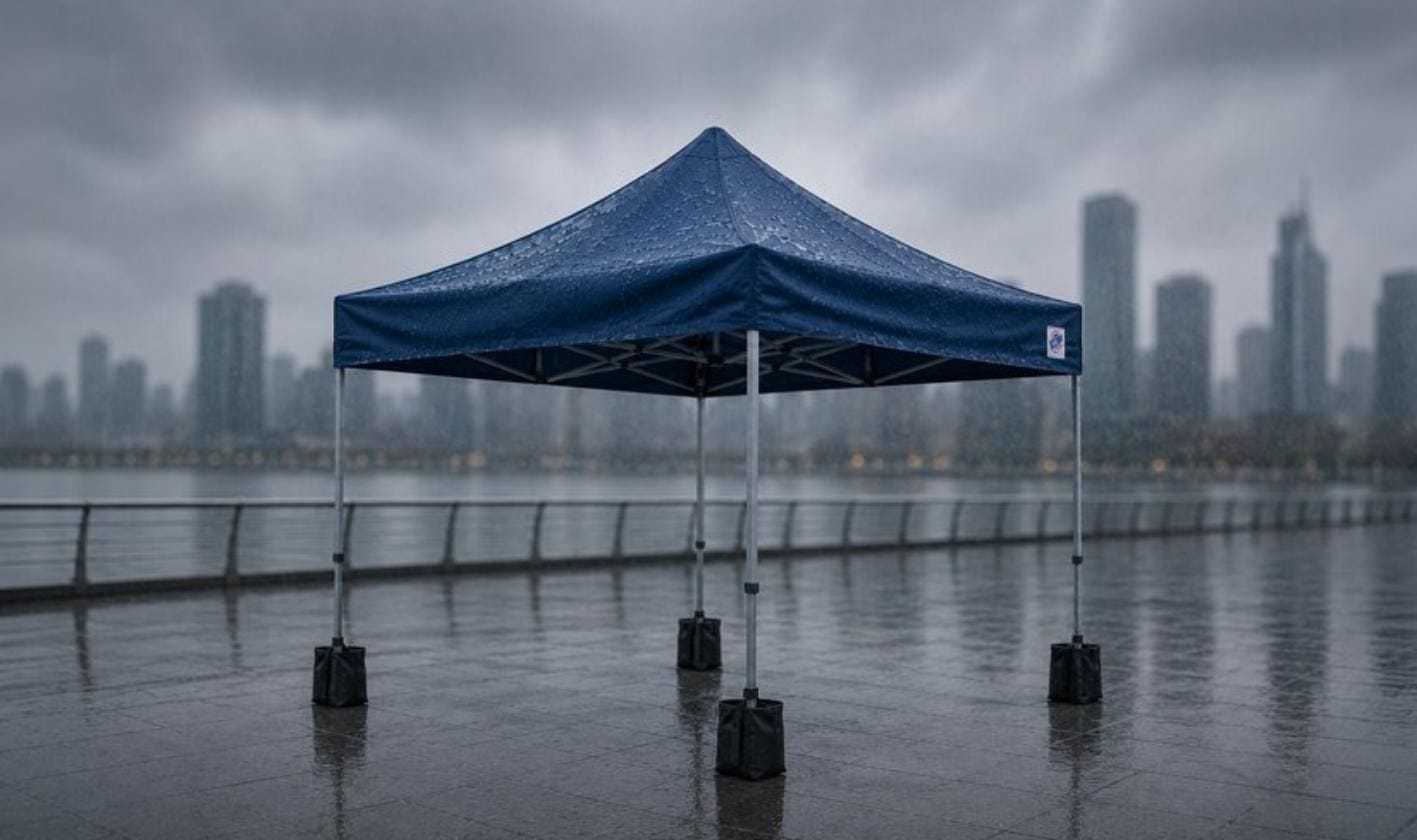
Weather resistance in canopy tents varies significantly by frame material fabric quality and structural design. A standard pop-up canopy handles light drizzle and shade, but may struggle in heavy rain or high winds. Knowing what each tent is built for helps you avoid a costly mismatch between your shelter and your conditions.
Most people only think about weather protection only after they experience a problem. Their tent pools water during a vendor market. A gust bends a frame leg mid-event. The canopy top soaks through during an afternoon downpour. These are not freak incidents; they are the predictable result of choosing a tent built for casual backyard use and putting it in a demanding outdoor setting.
This guide breaks down exactly what weather resistance means for canopy tents and helps you choose the right shelter for your specific environment.
What Does Weather-Resistant Actually Mean for a Canopy Tent?
Weather resistance is not a single feature. It is a combination of fabric rating frame durability and structural design working together.
Waterproof vs. Weather-Resistant: What Is the Difference?
A weather-resistant canopy tent repels light moisture and handles mild conditions. A waterproof canopy tent uses sealed seams and coated fabric rated to withstand sustained rainfall without leaking through. The distinction matters most for vendors and event organizers who cannot pack up mid-rain.Look for a tent with a fabric rated at 1000mm hydrostatic head or higher if you expect genuine rain protection. Anything lower is better classified as water-repellent rather than waterproof.
How Fabric Weight and Coating Affects the Performance?
Canopy fabric is typically rated by deniers as a measure of thread density. Higher denier means thicker more durable material.
- 150D–300D polyester: Lightweight and suitable for occasional fair-weather use
- 300D–600D polyester: Mid-range durability with better water resistance
- 600D+ or solution-dyed fabric: Best suited for repeated outdoor use and better UV exposure
A polyurethane or silver coating on the underside of the fabric adds both waterproofing and UV protection. Uncoated fabric fades faster, allowing more moisture penetration over time.
How Much Rain Can a Canopy Tent Handle?
A properly rated waterproof pop-up canopy for events can manage steady rainfall without significant leakthrough. The challenge is not always the fabric itself.
Unsealed seams allow water to wick through stitching holes even when the fabric is technically waterproof. Look for heat-sealed or taped seams on any tent you plan to use in genuine rain conditions. Roof pitch also plays a role. A steeper pitch sheds water faster and reduces pooling which can stress the frame and cause sagging.
Can a Canopy Tent Withstand Heavy Rain?
In heavy sustained rain most pop-up canopies will struggle without sidewalls. The open sides allow rain to blow in horizontally and reduce overall shelter. Adding canopy sidewalls to any setup dramatically improves protection and keeps the interior usable during a storm.
Commercial-grade tents with reinforced frames are better equipped for heavier conditions because their poles and connectors are built to carry more load without flexing or collapsing.
How Wind-Resistant Are Canopy Tents?
Wind is often more damaging than rain. A canopy top acts like a sail and without proper anchoring or a wind-resistant frame design even a mid-range gust can flip or collapse a tent.
What Makes a Canopy Tent Wind-Resistant?
Several structural factors determines how well a tent performs in wind:
- Frame material: Steel frames are heavier but more rigid. Aluminum frames offer a better strength-to-weight ratio and resist corrosion
- Truss design: Triangulated truss-style frames distribute the wind load in a more effective way than simple straight-leg frames.
- Leg locking mechanisms: Frames with multiple height positions and positive-lock buttons hold position better under lateral pressure
- Canopy shape: Vented roof panels allow air to pass through instead of building up pressure underneath
Heavy duty canopy tents designed for commercial use typically include these features as standard rather than as upgrades.
How to Secure a Canopy Tent in Windy Weather?
Anchoring is non-negotiable in exposed outdoor settings. The Standard options include:
- Stake and guy-wire kits for grassy or dirt surfaces
- Weight bags filled with sand for paved areas or concrete
- Ratchet straps to anchor to a vehicle or fixed structure
At minimum use 25 lbs of ballast per leg. In coastal or exposed venues double that. Wind ratings listed by manufacturers typically assume the tent is properly anchored and an unsecured tent is not rated for anything.
Are Commercial Canopy Tents Better for Challenging Weather Conditions?
Yes, and the difference is substantial. Commercial canopy tents are engineered for repeated professional use in variable conditions. They use heavier gauge frames, thicker fabric and more robust connection hardware than recreational tents. Professional event canopies also tend to offer modular accessory systems. That is, you can add sidewalls, shade panels and custom printing without replacing the entire structure.
Should I Choose a Pop-Up Canopy or a Commercial Canopy Tent?
The right answer depends on the use frequency conditions and the budget.
Pop up canopy tents make sense for:
- Occasional weekend use
- Events with mild predictable weather &
- Situations where portability is top priority
Commercial canopy tents make sense for:
- Regular vendor or event use
- Coastal or high-wind environments
- Situations, where the tent stays up for multiple consecutive days
If you are on the fence a mid-range commercial tent offers durability closer to professional grade without the full commercial price point.
How to pick the Right Canopy Tent for My Local Climate?
Start by identifying your two or three most common weather challenges, not your worst-case scenario but your typical event conditions.
- Hot and sunny climates: Prioritize UV-rated fabric with a high UPF ratings. And choose lighter colors that help in reflecting heat.
- Rainy or humid regions: Go for waterproof fabric with sealed seams and adequate roof pitch
- Windy or coastal areas: Choose a truss-frame commercial design with ballast compatibility
Once you know your conditions use those as filters. Weather resistant canopy tents engineered for specific environments which will outlast and outperform general-purpose options in those same conditions every time.
For events where your shelter defines your brand consider custom canopy tents that combine structural performance with a professional branded appearance.
If your canopy top wears out over time, a replacement canopy top lets you refresh the setup without replacing the entire frame, making a quality frame a smart long-term investment.
Conclusion
A weather-resistant canopy tent is only as reliable as its weakest component whether that is the fabric rating the frame gauge or how it is anchored. Matching your tent to your actual conditions is the most practical decision you can make before your next outdoor event.
E-Z UP offers a range of outdoor event shelters built for real-world performance across a variety of climates and use cases. If you are unsure where to start exploring E-Z UP canopy tents by intended use category is a straightforward way to narrow your options without guesswork.
Frequently Asked Questions
Are canopy tents waterproof or just weather-resistant?
Most canopy tents are weather-resistant. Offering protection from light rain and wind. For better rain protection, look for waterproof fabrics, sealed seams, reliable hydrostatic head rating before purchasing.
What is the difference between a waterproof and weather-resistant canopy tent?
A weather-resistant canopy manages light moisture and mild conditions. A waterproof canopy uses a higher-rated coated fabric and sealed or taped seams to prevent water from passing through under pressure. For regular outdoor events in rainy climates choose a tent explicitly rated as waterproof rather than simply water-repellent.
What features make the canopy tent more weather-resistant?
Key features such as high-denier coated fabric with sealed seams, a steel or reinforced aluminum truss frame vented roof panels for wind relief positive-lock height adjustments and compatibility with sidewalls and anchoring systems. Each feature addresses a specific weather challenge rather than acting as a general upgrade.
How wind-resistant are pop-up canopy tents?
Standard pop-up canopies are designed for calm to light-wind conditions. Most perform adequately up to 15–20 mph with proper anchoring. Beyond that a commercial-grade truss frame with vented panels and ballast anchoring provides meaningfully better performance. Never leave any canopy tent unanchored in outdoor conditions regardless of wind speed.
Are commercial canopy tents better for challenging weather conditions?
Yes. Commercial canopy tents use heavier gauge frames, reinforced joints, thicker fabric and a more robust hardware than recreational tents. They are built to withstand repeated use across variable conditions. For vendors, event organizers or anyone using a tent regularly in demanding environments the durability difference is significant and cost-effective over time.