
When you are shopping for a canopy tent, the frame material is one of the first decisions you will face. Steel or aluminum? On the surface, both seem like solid choices, and in many ways they are.
But the right answer depends on how often you plan to use your canopy, where you will set it up, and how much you want to carry around in a bag.
This is not a question with one universal answer. But there is a clear winner for most people, and the reasoning is worth understanding before you spend a dollar.
Why the Frame Material Matters More Than You Think
The frame material actually matters more than anyone could think about. As it determines how stable your canopy feels when wind picks up, how many seasons it lasts through repeated setup and teardown, and how much weight you are hauling to your next event. Material choice shapes all three.
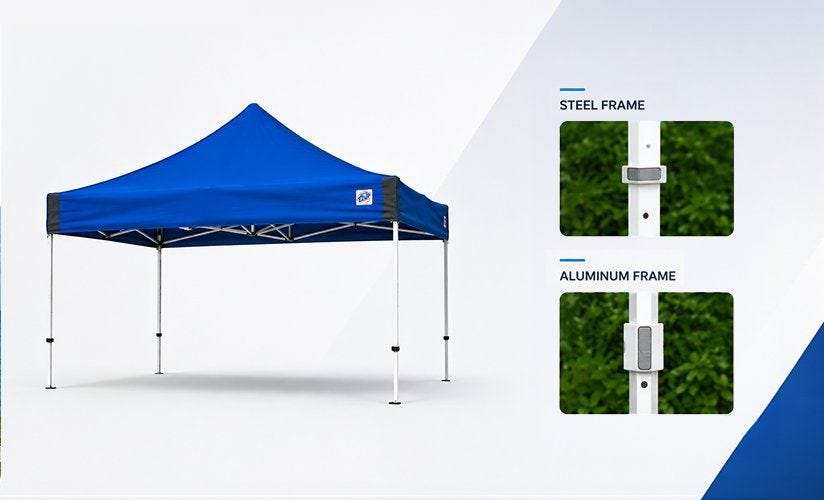
Steel and aluminum are very much different from each other. Their strength characteristics, corrosion behavior, weight profiles, and long-term durability each point towards different use cases. Understanding their unique qualities makes it easier to match the right shelter to the way you actually work. When comparing a steel vs aluminum canopy frame, the decision usually comes down to portability, weather resistance, and long-term use.
Steel Frames: For a Budget-Friendly Starting Point
Steel is the more affordable option compared to other metals. Raw steel costs less to source than aluminum, and that saving gets passed along to the buyer. If you are setting up your canopy a handful of times a year and want to keep costs low, a steel frame will get the job done without a major investment.
The E-Z UP Eclipse® is built on a High Strength reinforced frame, making it the go-to choice for professionals who need dependable, everyday performance. The internal leg reinforcements keep the frame rigid under pressure, while E-Z Glide™ Leg Adjusters with debris-draining channels allow smooth height changes in sand, dirt, or gravel without fighting the mechanism.
The Eclipse® MAX takes the steel frame a step further. It features an open-ceiling design that pushes head clearance to 11 feet and adds StormRod™ reinforcements, patented canopy supports that are integrated directly into the top to help deflect wind, rain, and snow. The dome-like geometry channels water away from the canopy surface, reducing saturation and pooling that can weigh down cheaper tent tops over time.
Every Eclipse® shelter comes backed by a 7 Year Limited Warranty. At that level of coverage, you know the frame is built to hold up.
Steel does weigh more than aluminum. That is a real consideration if you are frequently setting up solo or transporting your canopy across long distances. It is also a material that requires a proper finish to hold off corrosion over time.
E-Z UP addresses this with high-impact Nylon 6 joints and anti-corrosion hardware throughout the Eclipse® build, which extends the usable life of the frame even in outdoor conditions that would wear down a lesser steel product quickly.
For buyers searching for the best heavy duty canopy frame for vendors, steel remains a reliable starting point. Explore E-Z UP’s heavy-duty pop up canopies and commercial canopy tents for professional-grade options.
Aluminum Frames- Built to Handle Repeated Use
Aluminum is lighter, corrosion-resistant by nature, and more durable over the long term. A quality aluminum frame typically weighs around 30 to 40 percent less than a comparable steel frame. That difference is easily noticeable when you are transporting and setting up your canopy, especially if you are doing it alone.
If the Eclipse® is the benchmark for everyday commercial performance, the Endeavor® is what you reach for when conditions get demanding and the stakes are higher.
E-Z UP's aircraft-grade aluminum frames are 25% lighter than comparable steel versions, which matters immediately when you are setting up a 10x10 or 10x20 shelter by yourself before an early event.
The oversized 50mm octagonal legs, reinforced with DualCore™ technology, give the Endeavor® significantly more contact surface and structural rigidity than a standard round-leg frame at any weight class.
Aluminum naturally resists corrosion, without depending on the coating to keep the rust at bay. In coastal, humid, or high-rainfall environments, that built-in resistance is a material advantage that actually compounds over years of use.
For businesses comparing an aluminum vs steel canopy frame for commercial use, aluminum stands out for portability, weather resistance, and long-term durability. Browse E-Z UP’s durable canopy frames and aluminum pop up canopy and built for demanding event setups.
Total Cost Over Time-Think Past the Price Tag
Steel frame tents can range from $400 to $700 for a printed 10x10. And for a quality aluminum frame with custom printing, it typically starts around $900 and can go higher depending on the build. That gap looks significant at first glance.
But users who set up often, attend regular trade shows or rely on their canopy for branding presence find themselves replacing steel frames every season. Buying two or three steel frames over four years is not the savings it appears to be, especially when you account for shipping time and the downtime while you wait.
Aluminum frames, treated properly and stored with care, can last many years without structural issues. That kind of longevity makes the higher upfront cost easier to justify.
If you are searching for the best canopy frame material for outdoor events, aluminum often delivers the best balance of durability, portability, and long-term value for frequent use.
Which Frame Is Right for Your Setup?
If your canopy sees a few weekends a year at casual outdoor events and your budget is tight, a quality steel frame is a reasonable place to start. If you are running a business, attending markets regularly, or representing a brand at events throughout the year, aluminum is the smarter investment.
For users dealing with unpredictable weather, a wind resistant canopy with reinforced support systems and quality anchoring matters far more than price alone. E-Z UP offers canopy tents for windy conditions along with portable canopy tents designed for repeated outdoor use.
Ready to Find Your Perfect Canopy?
E-Z UP has been engineering canopy tents built for real-world performance since the category was invented. Their aircraft-grade aluminum frames are engineered to be 25% lighter than steel while delivering the stability and durability that serious users need.
Whether you need a quick-setup shelter for a weekend market or a professional-grade setup for high-traffic events, E-Z UP has a canopy built for it.
Browse E-Z UP's full lineup of aluminum canopy tents and find the right fit for how you work.
Frequently Asked Questions
Is aluminum or steel,which is better for a canopy frame?
Both materials have advantages, but aluminum is generally better for frequent use because it is lighter, naturally corrosion-resistant, and easier to transport. Steel works well for occasional use and tighter budgets.
Which canopy frame lasts longer outdoors?
Aluminum frames resist rust and corrosion naturally. With proper care, they can handle years of repeated use in different weather conditions.
Are steel canopy frames stronger than aluminum frames?
Steel frames are often heavier and feel more rigid, but high-quality aluminum frames engineered with reinforced supports can deliver excellent strength while remaining easier to carry and set up.
What is the best canopy frame for windy weather?
A reinforced aluminum frame with proper anchoring and support systems is often considered the strongest pop up canopy frame for outdoor events and windy conditions
Which canopy frame is lighter and easier to transport?
Aluminum frames are comparatively lighter than steel, making them easier for solo setup, transport, and repeated event use. That is why many professionals choose aluminum over other canopy frames.