

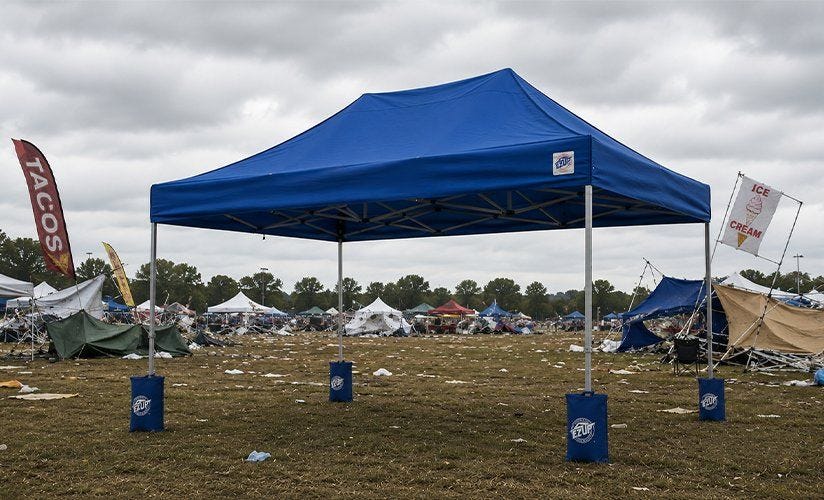
A canopy tent feels solid… until the wind proves otherwise. If you’ve ever seen one lift slightly off the ground or drag a few inches during a sudden gust, you already know how quickly things can go wrong. It doesn’t take a storm either. Even moderate wind can mess with your setup if it’s not anchored properly.
That’s why canopy tent wind protection isn’t something to figure out on the spot. You need a plan before you even open the tent. This guide is a practical look at how to secure a canopy tent in windy conditions step by step, based on what actually works outdoors.
Why This Matters More Than People Expect
Most people underestimate wind. They’ll secure two legs, maybe throw on some light weights, and assume that’s enough. It usually is… until it isn’t. At outdoor events, especially in the US, there’s a reason organizers insist on proper anchoring. A loose canopy doesn’t just fall over neatly. It moves unpredictably, and once it’s airborne, you can’t control where it goes. Following basic safe canopy setup guidelines isn’t about being extra careful. It’s just common sense once you’ve seen what wind can do.
Step-By-Step Safety Guide to Setup a Canopy Tent for Wind
Step 1: Look at the weather before anything else
Before setting up, just check the wind. Not casually, actually check it. Look at gust speeds, not just the average. If it’s calm, you’re fine. If it’s in that 15–25 mph range, you need to start thinking about reinforcement. Once it pushes higher, you should already be deciding whether setting up is worth it. A lot of issues happen because people skip this step entirely.
Step 2: Your surface decides everything
This is where most setups go wrong. People use the same anchoring method everywhere, which doesn’t work.
Stakes are your best friend here. Push them in deep and angle them away from the tent, not straight down. If the ground is loose or sandy, normal stakes won’t hold well. Use spiral ones instead, they grip better. Also, don’t just secure the legs and call it done. The wind hits the top of the canopy, so your anchoring needs to support that.
This is where things get tricky. You can’t rely on stakes, so weights become your main support. And not the light kind. If you’re looking for the best way to secure a canopy tent on concrete in the US, it comes down to proper weight per leg:
- Around 24 lbs works in light wind
- 40 to 50 lbs is safer in moderate wind
- Anything stronger needs even more
Even then, weights alone aren’t enough. You still need guy lines if the wind is noticeable.
Step 3: Don’t skip guy lines
This is the part a lot of people ignore, and it’s usually the reason setups fail. Guy lines control sideways movement. Without them, your canopy is basically relying on weight alone.
Attach them to the top corners and extend them outward. Longer lines help create a better angle and better stability. It’s a simple addition, but it makes your setup feel completely different, more like a proper professional canopy anchoring system rather than a temporary fix.
Step 4: Tension matters more than you think
Loose lines won’t help. Over-tight lines aren’t great either. You want that middle ground where everything feels firm and stable. If you have adjusters, use them. Metal ones hold better over time. Also, keep your stakes angled properly so they resist the pull instead of getting dragged out. It’s small details like this that actually make a difference when the wind picks up.
Step 5: Be careful with sidewalls
This surprises a lot of people. Sidewalls don’t really “protect” your canopy from wind. They do the opposite. They block airflow and increase pressure, which makes the entire structure harder to stabilize. If it’s windy, keep them open or just remove them. It’s one of the simplest outdoor canopy safety tips USA vendors learn over time.
Know When to Stop
There’s always a point where securing isn’t enough. If the wind keeps building or starts feeling unpredictable, it’s better to take the canopy down early instead of waiting for something to go wrong. A lot of damage happens in that “we’ll manage” phase.
Final Thought
Setting up a canopy is easy. Keeping it steady takes a bit more awareness. Once you get used to reading the wind, choosing the right anchors, and setting things up properly, it stops feeling complicated. It just becomes part of your routine. And honestly, that’s the goal, not worrying about your setup every time the wind changes.
FAQs
Can you use a canopy tent in windy conditions in the US?
Yes, provided that the anchoring is done correctly. In mild wind, a well-anchored canopy with taut guy lines and heavy sandbags or ground stakes works dependably. It is safer to take it down during heavier winds.
What is the best way to secure a canopy tent?
Use a combination of ground stakes or weight bags at each leg along with guy lines attached to the upper frame. This distributes the load and improves stability.
How much weight is needed to secure a canopy tent in wind?
Typically, 24 lbs per leg is enough for light wind, while 40 to 50 lbs or more per leg is recommended for moderate to strong wind conditions.
Can canopy sidewalls help in windy conditions?
No. Sidewalls increase wind resistance and can make the canopy less stable by trapping air.
What accessories are recommended to secure a canopy tent?
Common accessories include strong guy lines, metal adjusters, heavy-duty stakes, sandbag weights, and ratchet straps for added security.
Should I take down my canopy tent during strong winds?
Yes. If winds become strong or unpredictable, especially near 35 to 40 mph, taking the canopy down is the safest option.
Do I need different anchoring methods for different surfaces?
Yes. Stakes work best on soft ground, while weights are necessary for hard surfaces like concrete or asphalt.