
A poolside shade structure can make hot afternoons more comfortable, protect guests from direct sun and create a more inviting place to relax. The best option depends on how often you need shade, how much space you have and whether you want a portable canopy or a fixed outdoor feature.
This guide compares the most common pool canopy options and explains the practical details to check before buying, including UV protection, water resistance, frame material, anchoring and accessories.
Why add a canopy beside your pool?
Direct sun can quickly heat pool decks, patio furniture and serving areas. A well-placed canopy creates a cooler zone for lounging, supervising children, serving food or taking a break between swims. It can also help protect outdoor furniture and personal belongings from sun exposure and light rain.
A canopy is especially useful when the pool area has limited natural shade. Portable models can be moved or stored as your needs change, while cabanas and pergolas create a more defined outdoor room.
Types of pool shade structures
Pop-up canopy tents
A pop-up canopy is a flexible choice for families who want shade without a permanent installation. It can be positioned beside the pool, on a patio or elsewhere in the yard, then packed away when the season ends. Choose a model with a durable frame, a properly fitted top and compatible anchoring accessories.
Pool cabanas
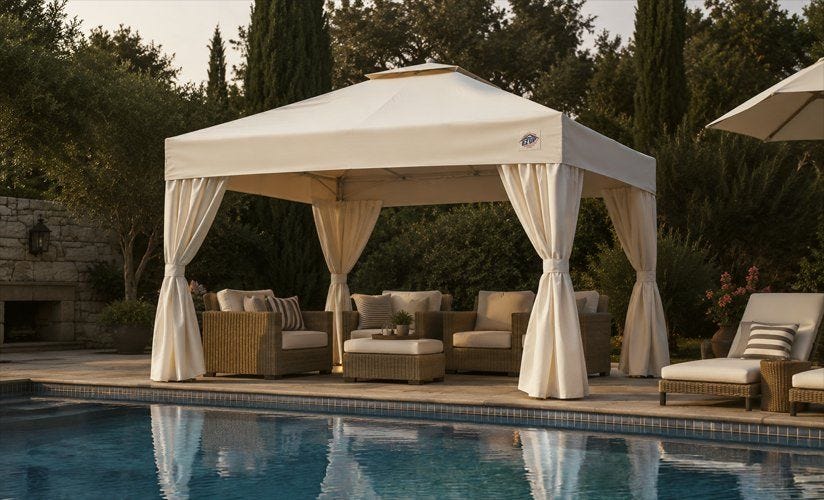
A cabana combines overhead shade with a more finished poolside appearance. Optional curtains can add privacy and help manage low-angle sun. The E-Z UP Bungalow collection is designed for this use, with premium materials and coordinated accessories.
Shade sails
Shade sails provide a modern, open look and work well over irregular spaces. They require strong attachment points and careful tensioning, so placement and professional installation may be important.
Pergolas
A pergola creates an architectural feature and can support curtains, lighting or climbing plants. It usually requires more planning, a larger budget and a suitable foundation than a portable canopy.
What to look for in a pool canopy
UV protection
Check the product specifications for the level of UV protection provided by the canopy fabric. Coverage matters too: the structure should be large enough to shade the seating or activity area during the hours you use it most.
Water resistance
Pool canopies are designed primarily for shade. Water-resistant fabric can help with light rain, but it should not be described as waterproof unless the manufacturer specifically rates it that way. Always follow the product instructions during changing weather.
Frame material
Aluminum resists rust and is easier to move than many steel structures. Steel can offer strength at a competitive price but may be heavier. Compare the complete frame design, joints and warranty rather than relying on the material name alone.
Size and clearance
Measure the available deck area, including room for legs, guy lines, weights and safe walking paths. Confirm that gates, doors and pool equipment remain accessible. A 10-foot by 10-foot footprint suits many seating areas, while a 10-foot by 15-foot canopy provides more covered space.
Anchoring and stability
Every canopy must be secured according to its instructions. Use compatible weight bags, stakes or another approved anchoring method for the surface. Never leave a temporary canopy unattended, and take it down when weather conditions exceed the product guidance.
The Bungalow aluminum shelter
The E-Z UP Bungalow is a premium poolside shelter available in 10-foot by 10-foot and 10-foot by 15-foot sizes. Its one-piece frame is made from rust-resistant 6061-T6 aircraft-grade aluminum, and the vented top helps air move through the shelter.
The solution-dyed acrylic top blocks 99% of harmful UV rays, resists water and sun fading, and is offered in 10 fabric colours. Two frame colours are available, along with custom graphics for a more personalized setup.
Optional curtains and a ceiling liner can create a more complete cabana experience. A cover bag is included. Compatible weight bags and the heavy-duty stake kit are sold separately, and the shelter is backed by a seven-year warranty. See the complete Bungalow features and specifications before choosing your configuration.
How to choose the right setup
- Measure the pool deck and mark the full canopy footprint.
- Decide whether portability or a permanent installation matters more.
- Check fabric UV protection and water-resistance claims.
- Choose anchoring accessories that match the surface.
- Confirm the warranty, included items and optional accessories.
- Review local rules for setbacks, structures and pool enclosures.
If you want a portable option for occasional use, explore recreational canopy tents. For frequently purchased models across several uses, compare our best-selling shelters.
Pool canopy care and safety
Allow fabric to dry completely before storage, remove dirt with the cleaning method recommended by the manufacturer and inspect the frame and fasteners regularly. Keep chlorine and other pool chemicals away from the fabric and metal components.
Anchoring is essential, but anchors do not make a temporary canopy safe in every condition. Close curtains or remove accessories if instructed, monitor the forecast and take the shelter down when severe weather or strong winds are expected.
Frequently asked questions
What size canopy is best for a pool deck?
A 10-foot by 10-foot canopy works well for a compact seating area. A 10-foot by 15-foot model provides additional shade for a larger lounge or dining setup. Measure the complete footprint and leave clear walking space around the pool.
Is a pool canopy waterproof?
Not necessarily. Many canopy fabrics are water-resistant and suitable for light rain, but that is different from waterproof construction. Check the specifications for the exact model.
Can I leave a canopy up all summer?
Follow the product manual. Portable canopies should be monitored, properly anchored and taken down when conditions exceed their intended use. They should never be treated as permanent structures unless the product is specifically designed and approved for that purpose.
What is the best frame material near a pool?
Rust-resistant aluminum is a strong choice in a humid poolside environment because it is durable and comparatively easy to move. The quality of the full frame design and its protective finishes also matters.
Do I need weights or stakes?
Yes, a canopy needs an approved anchoring method. The right solution depends on whether it sits on concrete, pavers, grass or another surface. Use only compatible accessories and follow the manufacturer’s instructions.
Create a more comfortable poolside space
The right pool canopy balances shade, stability, durability and the look of your outdoor area. Compare the specifications carefully, plan the full footprint and choose accessories that support how you will actually use the space. For a premium portable cabana with coordinated options, explore the Bungalow collection.