

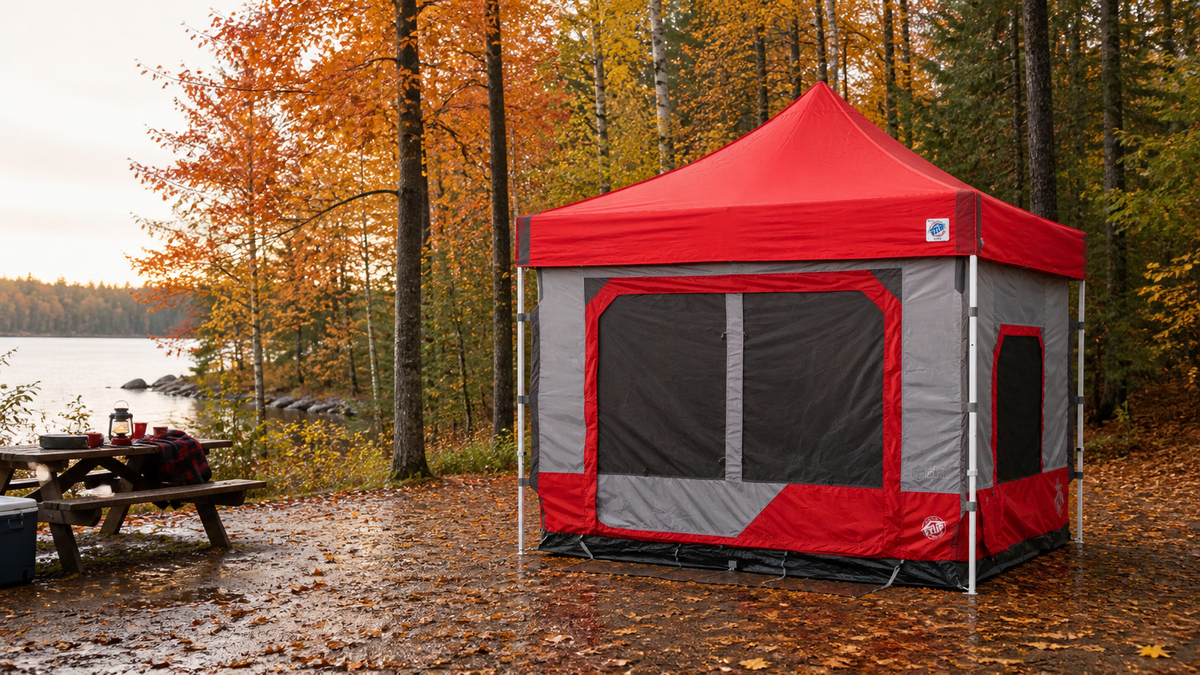
Fall camping in Canada rewards you with cooler hiking weather, colourful forests and quieter campgrounds. It also brings shorter days, damp ground, stronger temperature swings and weather that can change quickly. A comfortable autumn campsite therefore depends less on bringing more gear and more on giving every piece of gear the right job.
This guide explains how to organize a practical fall campsite, create a dry living area and decide whether a canopy, Camping Cube™ or Screen Cube™ best fits your trip.
Why fall camping requires a different setup
Summer camping is often built around shade and ventilation. In autumn, moisture management and protected living space become more important. Warm afternoons can turn into cold evenings, wet leaves can make the ground slippery, and an early sunset means cooking and organizing gear in lower light.
Before leaving, check the campground's operating dates, site rules and current weather forecast. Provincial and national parks can reduce services or close facilities later in the season. Pack for the lowest expected overnight temperature rather than the warmest daytime forecast.
Build your campsite in three zones
A simple three-zone layout keeps wet equipment away from sleeping gear and makes a 10x10 campsite easier to use.
1. A protected sleeping zone
Keep sleeping bags, clothing and electronics inside a fully enclosed sleeping area. An E-Z UP Vantage® Canopy and Camping Cube™ bundle creates a spacious 10x10 interior with standing headroom and attaches directly to the compatible canopy frame. Its fabric is treated to resist water, UV exposure and mildew, but it should still be treated as a portable shelter rather than a permanent all-weather structure.
2. A dry living and meal-preparation zone
A separate camping canopy over a picnic table gives you a place to prepare meals, play cards and sort equipment during light rain. Position it where runoff will move away from the table and sleeping area. Never allow water to pool on the canopy top.
3. A gear and transition zone
Use a mat or small covered area near the entrance for wet boots, rain jackets and muddy equipment. Keeping this transition zone outside the sleeping area reduces moisture and dirt inside the enclosure.
Camping Cube, Screen Cube or open canopy?
Choose a Camping Cube for sleeping and privacy
The Camping Cube turns a compatible E-Z UP canopy into a roomy enclosed camping tent. It is the better option when you need privacy, a sealed living area and space for people, pets and gear. The 10x10 footprint is especially useful for car camping, family trips and sites where standing room matters.
Choose a Screen Cube for airflow and insect protection
A Screen Cube™ is designed as a screened retreat. It works well as a shared living or dining space when mosquitoes and other insects are still active in early fall. Its mesh construction prioritizes airflow and visibility instead of sleeping privacy.
Choose an open canopy for flexible overhead cover
An open pop-up canopy is the most flexible option for a picnic table, cooking area or daytime gear station. It provides overhead protection from sun and light rain while keeping every side accessible. It does not replace an enclosed sleeping tent.
Choose the campsite before opening the shelter
Look for a level surface without depressions, exposed roots or loose branches overhead. Avoid the lowest point on the site, where rainwater can collect. Check the direction of the slope and position entrances away from the path of runoff.
Clear sharp sticks and stones before placing any floor or footprint. Keep the shelter the required distance from the fire pit, cooking equipment and neighbouring sites. Follow the campground's rules even when they differ from your usual setup.
Set up for rain and wind
- Place the folded shelter where it will remain before opening the frame.
- Expand the canopy with another person and lock it according to the product instructions.
- Attach the enclosure and confirm that the floor sits flat without pulling on the walls.
- Stake the shelter at every designated point and use the appropriate anchoring accessories for the surface.
- Keep the canopy top properly tensioned so light rain can drain.
- Recheck the forecast and anchoring throughout the day.
Anchoring reduces movement but does not make a portable canopy safe in every condition. Take the shelter down when strong winds, heavy rain, thunderstorms or snow are expected. Never leave a pop-up canopy unattended.
Control condensation without sealing yourself in
People, pets and damp clothing release moisture overnight. When warmer air meets cool fabric, condensation can form inside almost any tent. Keep vents and mesh openings unobstructed, store wet outerwear near the entrance and avoid pressing sleeping gear directly against the walls.
In the morning, air out the enclosure before packing it. If it must be packed damp, open it again and let every component dry fully as soon as possible. Storing wet fabric can lead to odour, staining and mildew.
Plan for shorter days
Set up before sunset whenever possible. Keep a headlamp accessible rather than buried in a bag, and add battery-powered camp lights for the shared living area. Bring spare batteries and protect electronics from cold and moisture.
Use only lighting and electrical accessories intended for outdoor conditions. Never place an open flame, stove, barbecue or unapproved heater inside a canopy enclosure. Fire-resistant fabric is not fireproof and does not make indoor combustion safe.
Fall camping checklist
Shelter and campsite
- Compatible canopy and Camping Cube, Screen Cube or separate sleeping tent
- Stakes and anchoring appropriate for the campsite surface
- Ground mat or footprint
- Rain jacket and waterproof footwear
- Dry bags or sealed bins for clothing and food
- Microfibre towel for condensation and wet equipment
Warmth and sleep
- Sleeping bag rated for the expected overnight temperature
- Insulated sleeping pad
- Moisture-wicking base layers and warm mid-layers
- Dry sleeping clothes, toque and extra socks
- Blankets appropriate for the forecast
Light and organization
- Headlamp for each camper
- Battery-powered campsite lighting
- Spare batteries or power bank
- Compact camping chairs
- Garbage bags and separate storage for wet gear
Frequently asked questions
Is a pop-up canopy useful for fall camping?
Yes. A properly anchored pop-up canopy creates a flexible covered area for a picnic table, gear organization and protection from sun or light rain. It should be taken down when severe weather or unsafe wind conditions are expected.
Can you sleep in a Camping Cube in the fall?
A Camping Cube is designed as a roomy camping enclosure that attaches to a compatible E-Z UP canopy. Your sleeping bag, insulated pad and clothing must still be selected for the forecast because the enclosure is not an insulated four-season expedition tent.
How do you keep a tent dry during fall camping?
Choose elevated, well-drained ground; keep entrances out of runoff; maintain ventilation; separate wet clothing from sleeping gear; and allow the enclosure to dry completely before long-term storage.
Can you use a heater inside a Camping Cube or canopy?
Do not use an open flame, stove, barbecue or unapproved heater inside a canopy or camping enclosure. Follow every product warning and campground fire rule. Use correctly rated sleeping equipment and clothing as your primary protection from cold.
Create a more comfortable autumn campsite
A good fall setup gives sleeping gear a dry home, creates a practical living area and leaves enough ventilation to manage moisture. Start with the weather forecast and campsite rules, then choose the shelter configuration that matches how you will actually use the space.
Explore the complete E-Z UP camping collection, including Camping Cube bundles, screened shelters, chairs, lighting and campsite accessories.